



19/05/2026
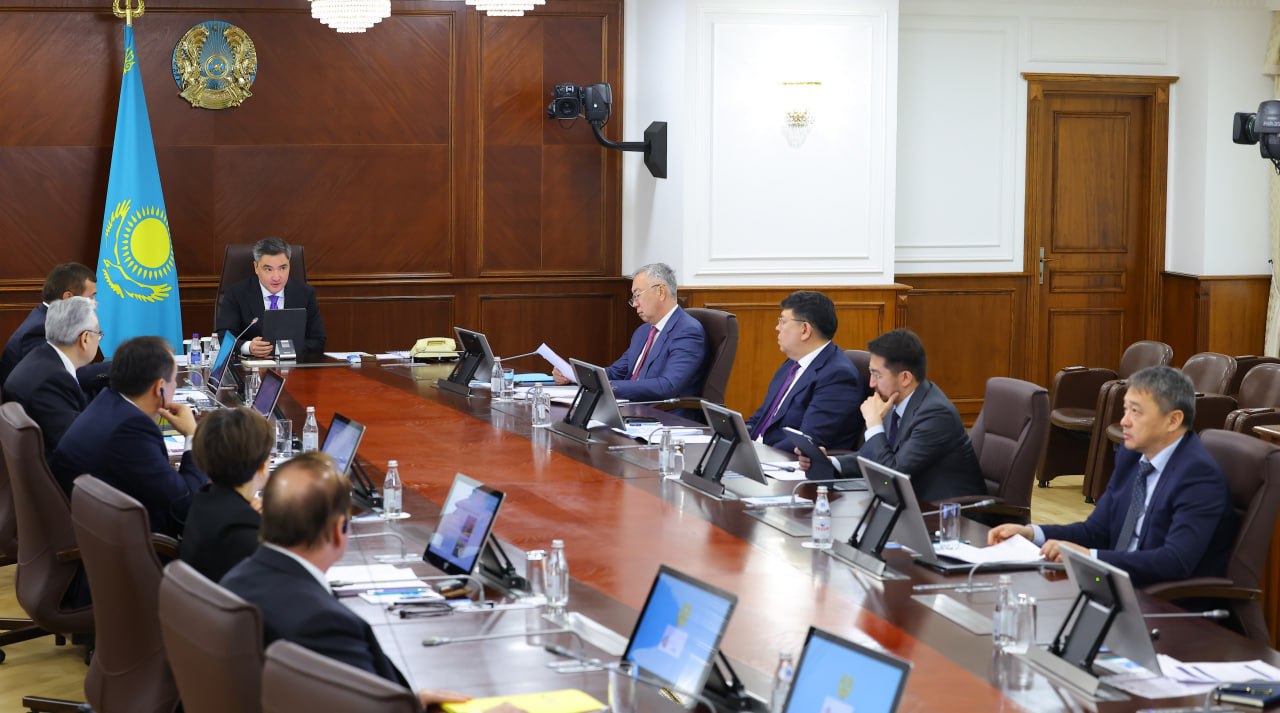

On May 19, a meeting of the Government of Kazakhstan was held under the chairmanship of Prime Minister Olzhas Bektenov, focusing on the development and digitalization of the country’s aviation industry.
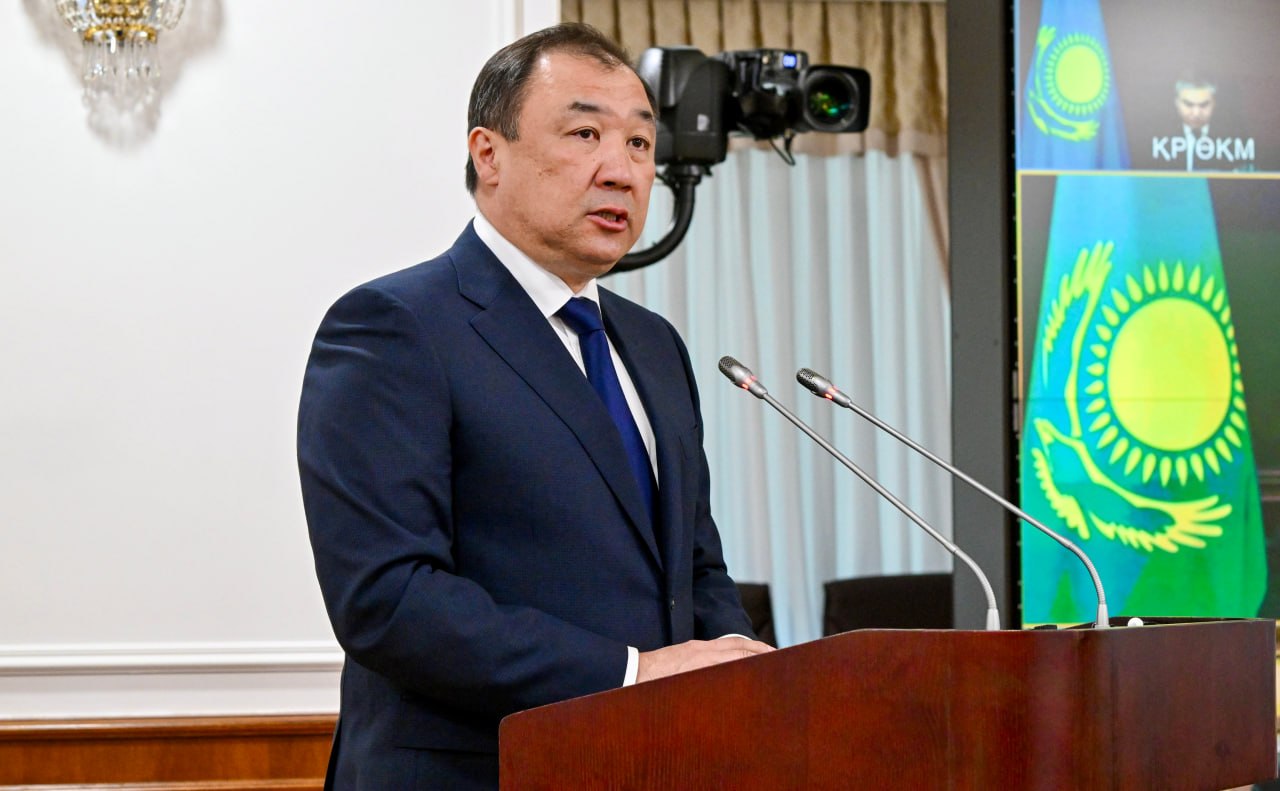
Minister of Transport of the Republic of Kazakhstan Nurlan Sauranbayev delivered a report on the implementation of the President’s instructions and the further development of civil aviation.
Presentations were also made by Michael Daniel, Chief Executive Officer of the Aviation Administration of Kazakhstan, and Ibrahim Canliel, Chief Executive Officer of the Air Astana Group. Heads of airports and airline companies also attended the meeting.
Following the comprehensive aviation security audit (USAP-CMA), Kazakhstan ranked first among CIS countries and entered the world’s top 20 countries, achieving a 95.7% compliance rate with ICAO standards. To further enhance safety levels, a Center for the Investigation of Transport Accidents and Incidents has been established.
By the end of the current year, Kazakhstan, in cooperation with the International Civil Aviation Organization (ICAO), plans to develop a Master Plan for the development of the aviation industry through 2050.
During the first four months of 2026, Kazakh airlines transported 4.6 million passengers (compared to 15.4 million for the whole of 2025). Cargo handling volumes reached approximately 50,000 tons (173,300 tons in 2025), while the country’s airports served 9 million passengers (31.8 million in 2025).
In 2026, Kazakhstan is subsidizing 24 socially significant air routes with total funding amounting to 6.4 billion tenge. Additional momentum for the development of the domestic route network is being provided by the launch of tourist destinations, including Urjar–Almaty, Urjar–Astana, Usharal–Astana, Usharal–Almaty, Balkhash–Almaty, and Balkhash–Astana.
The international route network is also expanding: 15 new international destinations are planned for this year, four of which have already been launched.
Since the beginning of the year, Kazakhstan’s airline fleet has been expanded by three aircraft. Currently, the country’s commercial aircraft fleet totals 111 airplanes. By the end of the year, an additional six aircraft are expected to be delivered, while by 2040 domestic airlines plan to increase the fleet size by 2.5 times, reaching 261 aircraft.
Projects are also planned for two runways in Astana and Shymkent, along with the modernization of five airports across the country — Almaty, Atyrau, Urjar (terminal), Pavlodar (runway), and Aktau (apron). All projects requiring comprehensive modernization are scheduled for completion by 2029.
A separate area in the development of aviation hubs involves creating institutional and infrastructure conditions for airport growth. Plans include expanding the list of priority economic activities based on the functional specialization of six airports — Astana, Almaty, Aktobe, Aktau, Karaganda, and Shymkent.
At the same time, a significant portion of airport infrastructure modernization is being carried out with the involvement of private investment. In particular, during the visit of the President of the Republic of Türkiye on May 14, an investment agreement worth 190 billion tenge was signed for the modernization of Almaty Airport.
Over the past five years, transit flights have increased fourfold. Today, transit traffic generates the majority of revenues from air navigation services.
A five-year Action Plan has been developed to support domestic cargo airlines, предусматривающий improvements to the regulatory framework and the introduction of state support mechanisms for air cargo transportation. In addition, a duty-free regime has been introduced for cargo aircraft.
Thanks to the measures taken by the Government, the price of aviation fuel supplied through KazMunayGasAero remains among the most competitive in the region. Domestic airlines also have direct access to oil refineries to help stabilize the market. As a result, the number of transit flights making refueling stops has increased by 16.3%.
The government is creating favorable conditions for the development of small aviation. The cost of obtaining certification has been reduced by 50%, and the insurance system is also being modernized. At the same time, work is underway on developing separate regulatory rules for this sector, regulating tourist flights, and simplifying the transition of pilots from military to civil aviation.
As part of the President’s instructions on the introduction of advanced technologies and the development of innovative transport infrastructure, active efforts are being made to establish an Urban Air Mobility ecosystem.
A total of 16 Q-Gate terminals are currently operating at the airports of Astana and Almaty, reducing border control processing time to as little as 50 seconds. This year, an additional 16 Q-Gate terminals are planned to be installed at the airports of Shymkent, Atyrau, Aktobe, and Aktau. The next stage will involve the introduction of biometric identification for domestic flights.
In the cargo transportation sector, the development of the e-Freight electronic document management system is continuing. Integration with government information systems is expected to reduce cargo processing times from one day to just one hour and ensure full digitalization of business processes.