


30/12/2025

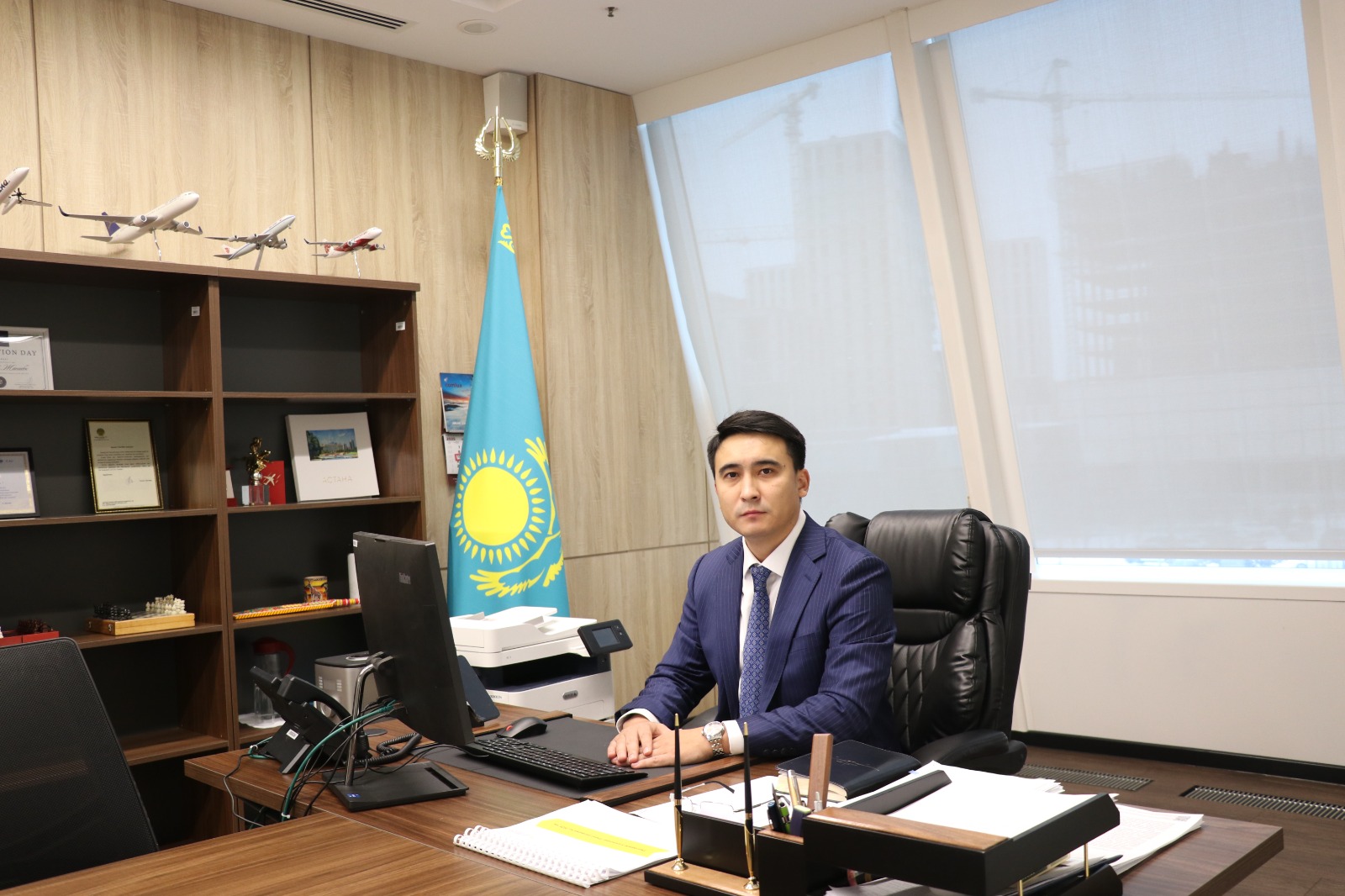
Kazakhstan has joined the global club of leaders in civil aviation. In an exclusive interview with Kazakhstanskaya Pravda, Zhanibek Sharipbayev, Executive Director for Aviation Security of the Aviation Administration of Kazakhstan JSC, spoke about the steps already taken by the state and the complex challenges that still lie ahead.
– Following an audit conducted by the International Civil Aviation Organization (ICAO), Kazakhstan has entered the Top 20 countries with the most resilient aviation sectors. Mr. Sharipbayev, could you comment on this news?
– For context, ICAO brings together 193 countries. During the audit, the international organization assessed how well Kazakhstan’s civil aviation system complies with international standards. The level of compliance was determined at 95.7 percent, meaning that almost all stringent requirements are being met. This is the result of many years of systematic work by the Civil Aviation Committee, as well as the independent oversight body – the Aviation Administration of Kazakhstan. In short, we have updated the regulatory framework in line with international standards, strengthened personnel training, and introduced a unified approach to quality control at airports and airlines.
– Kazakhstan actively applies international experience to enhance aviation security. Who is implementing these tasks in our country?
– Kazakhstan has a nationally certified ICAO auditor. He heads the Aviation Security Training Department and serves as Chief Aviation Inspector. He completed a six-month exchange program at the European Civil Aviation Conference, where he studied the European security system from the inside. He is now sharing this experience with Kazakhstani colleagues. In addition, five ICAO-certified instructors operate in the country, providing training in accordance with ICAO standards. Clear algorithms for screening, operational information exchange, and response have been established.
– What criteria were key during the audit?
– After completing their on-site work, the audit team led by Head of Mission Vain Callum spent another sixty days conducting analysis at ICAO headquarters. Aspects such as legislation, quality control and oversight systems, personnel training, and others were reviewed. Each area contained hundreds of protocol questions. This multi-level assessment ensures objectivity and consistency in evaluating different states.
– What changes were made to screening and baggage handling procedures after the audit?
– The entire screening chain for passengers, crews, staff, and cargo has been unified, with updated checklists and operational instructions. Logistics have been improved at several airports, and more advanced screening systems have been installed. Without going into details, I can say that the process for inspecting high-risk cargo and equipment allowed into airport restricted areas has been fully regulated.
I personally travel frequently on various airlines as part of my professional duties. During flights, I am able to objectively assess service quality, operational organization, and the overall dynamics of improvement in the sector. I must admit that on international routes I predominantly choose Kazakhstani carriers, as they demonstrate a high level of reliability. As for airports, the performance of Astana, Almaty, and Aktau airports is widely viewed positively today. Modern technological solutions are being implemented, conditions for passengers and staff are improving, navigation is being enhanced, and the throughput capacity of screening zones is increasing.
– Given the complex geopolitical situation worldwide, how are decisions made regarding flights to crisis regions?
– We have a well-established risk assessment system. The Aviation Administration of Kazakhstan, government bodies, and airlines work on this daily. Specialists rely on international advisories, situation forecasts, data on the security levels of destination airports, and possible alternative routes. The core principle remains unchanged: the safety of passengers and crews outweighs any commercial or operational considerations. This year, Kazakhstan moved to a more advanced level of such analysis. Eight new aviation security directives were issued regarding operations in conflict zones. Essentially, we have established a unified, standardized approach to threat assessment, enabling faster and more accurate decision-making. Dedicated call centers monitor the global situation in real time and collect operational data.
– Pilots have raised concerns about laser attacks. How difficult is it to identify offenders?
– You are referring to cases where a common household device can become a serious source of danger. Many people do not realize that even a brief flash of light directed into the cockpit can temporarily blind a pilot. Just a few seconds can pose a serious risk to flight safety. The issue is compounded by the fact that such incidents usually occur at night and often far from aerodromes. This is a global problem. Thousands of such cases are recorded annually in the United States, while the United Kingdom and Australia have strengthened criminal liability. Airports worldwide are implementing specialized laser detection systems and rapid investigation algorithms.
– Mr. Sharipbayev, let us address the sensitive issue of flight delays. Last autumn, monitoring was conducted at Astana and Almaty airports. What were the findings?
– The monitoring was carried out at the instruction of Vice Minister of Transport Talgat Lastaev. Mobile teams of aviation inspectors and representatives of the Civil Aviation Committee collected data over a two-week period, followed by a thorough analysis. The main causes of queues in screening areas were peak passenger flows, uneven lane utilization, manual screening, and specific baggage handling issues. These matters have been included in an optimization plan: personnel training is being strengthened, resources are being reallocated, and the organization of technological zones is being improved. We work directly with airports on these issues.
As for flight delays, they are usually caused by a combination of factors: adverse weather, the need for additional aircraft inspections, congestion during peak hours, or tight schedules. Aviation operates as a single system. If one aircraft is delayed, the impact cascades. The same aircraft and crew may be scheduled for several consecutive flights, so a delay can propagate. For example, if an aircraft is delayed in the morning due to fog at one airport, it may be delayed again later in another city, even in good weather. With dense schedules, there is little buffer time.
Each case is reviewed individually, not to assign blame, but to understand how to prevent similar situations in the future. In some cases, staffing needs to be reinforced; in others, schedules adjusted or coordination between services improved. The ultimate goal is to ensure flights operate as punctually as possible and that passengers feel calmer and more confident.
– What measures are planned to maintain a high level of aviation security and further develop civil aviation in Kazakhstan?
– Today, response algorithms for potential threats are coming to the forefront. These include unmanned aerial vehicles, insider threats, cyber risks, and other modern interference scenarios. Technology is important, but the decisive role is played by personnel working on the ground. Airport and airline inspectors, screening system staff, and operators are the first to encounter potential risks and ensure aviation security standards are upheld in real time.
Equally important is the work of the Aviation Administration of Kazakhstan. Its employees shape aviation policy, participate in drafting regulations, and conduct risk analysis. Their competence and professionalism are key success factors.
At the same time, Kazakhstan continues to expand its route network and open new flights. The country is strengthening its position globally as a dynamically developing aviation hub.
– Mr. Sharipbayev, thank you for this insightful and substantive discussion.
Interview conducted by Galina Vologodskaya