


23/05/2025

.jpeg)
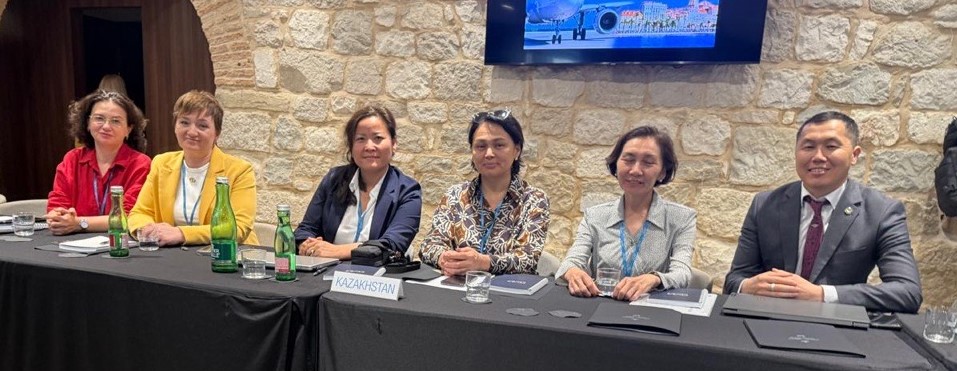
Kazakhstani specialists participated in the 46th meeting of the ICAO Language Proficiency Requirements Implementation Task Force (ICAO LPRI TF 46), held in Split, Croatia.
The event brought together aviation experts from over 20 countries, including representatives from international organizations such as EASA, FAA, IATA, ICAEA, IAOPA, EUROCONTROL, JAA TO, and Lenguax UK.
The Kazakh delegation included representatives from the Aviation Administration of Kazakhstan (AAK), the Training Center of RSE “Kazaeronavigatsia,” and SCAT Airlines. They actively engaged in discussions and presented their proposals to international colleagues.
Key topics of discussion included the integration of artificial intelligence (AI) into aviation English and standard phraseology training, as well as the potential benefits and risks of using AI in both training and testing. Participants also examined methods for distinguishing between AI-generated responses and those provided by actual candidates.
The group also addressed the development of an e-learning course for inspectors overseeing testing centers, in accordance with ICAO EUR Doc 046 (Guidance on the Harmonized Implementation of Language Proficiency Requirements and Its Oversight). New approaches to defining English language proficiency requirements for personnel not involved in radiotelephony communication were also discussed.
Special attention was given to online testing, including qualification requirements for administrators and examiners, candidate readiness, equipment setup, and adherence to ethical standards.
Madiyar Karazhanov, Senior Aviation Inspector of the AAK Licensing Department, raised a question regarding how other countries implement ICAO Annex 12 provisions 2.3.3 and 2.3.4 concerning search and rescue (SAR) operators.
Some countries require SAR coordination center operators to have ICAO Level 4 English proficiency. Thus, the application of English language proficiency recommendations for radiotelephony communication—essential for the effective performance of SAR coordination center operators—is determined by each country’s civil aviation authority.
Understanding how different states apply these standards—particularly in terms of English usage, coordination protocols, and operational readiness—helps align national practices with international requirements and enhances system interoperability.
Participants also discussed upcoming changes to ICAO Doc 9835 (Chapter 6), the revision of the ICAO rating scale and its implications for the LTO approval process, updated testing requirements in line with Doc 10197 TDG (Testing Development Guidelines), and the organization of information sessions and workshops in regional offices to support the implementation of Docs 10197 and 046.
The next ICAO LPRI TF meeting is scheduled to take place in Almaty in October this year.